+86-573-83996043

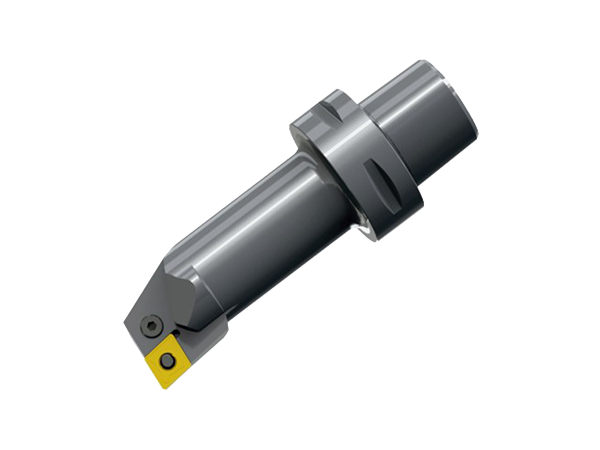
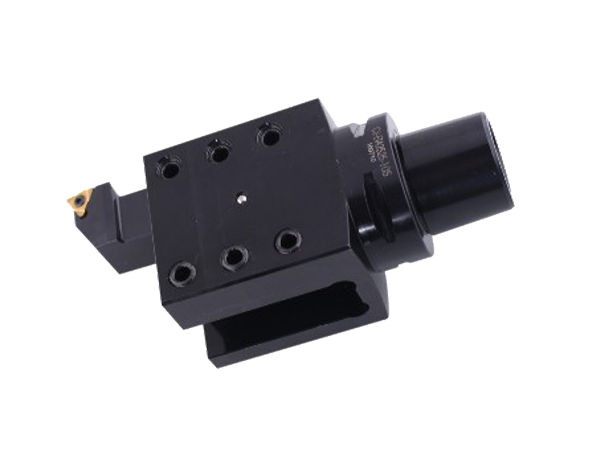
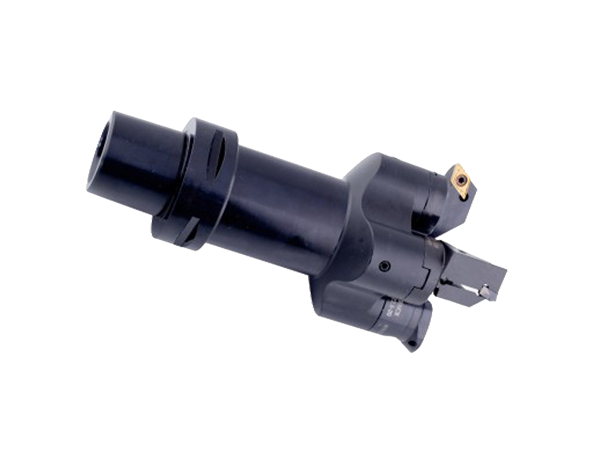
PSC Tool Holders — short for Polygon Shank Coupling Tool Holders — represent one of the most advanced tooling interface systems available for modern CNC machining. Built on the international ISO 26623 standard, the PSC system uses a polygonal taper geometry that fundamentally differs from traditional cylindrical or steep-taper shanks. The result is a tooling interface that delivers exceptional rigidity, high torque transmission, and repeatably precise positioning — all within a compact, short-shank design that is ideal for high-speed and high-performance cutting environments.
At Jiaxing XiRay Industrial Technology Co., Ltd, we have been engineering precision tool holders since the year 2000. With over 25 years of specialized manufacturing experience, a 30,000 m² production base, 8 dedicated production lines, and a team of 25 professional engineers, XiRay has built a global reputation for delivering complete tooling solutions that meet the most demanding machining requirements. Our PSC Tool Holder Series reflects this commitment: every component is manufactured in-house with a 100% self-made rate for core parts, backed by our ISO 9001 certified quality management system.
The fundamental advantage of the PSC system lies in the polygonal taper contact surface. Unlike conventional BT or CAT steep-taper holders, which rely on a single cylindrical surface for contact, the PSC polygon shank engages with the machine spindle simultaneously on both the taper face and the flange face. This dual-surface contact — often referred to as "two-face contact" — is what gives PSC its unmatched rigidity.
When a tool is clamped into a PSC spindle, the polygonal geometry creates a self-centering effect that ensures consistent, repeatable positioning with a runout accuracy of ≤ 0.003 mm. The enlarged contact area distributes cutting forces more evenly across the interface, dramatically reducing bending moments during aggressive machining. This is particularly important when performing face milling, heavy shoulder milling, or interrupted cuts, where forces are applied in multiple directions simultaneously.
The ISO 26623 standard defines PSC in multiple size variants: PSC32, PSC40, PSC50, PSC63, and PSC80. Each size corresponds to a specific spindle bore diameter and torque rating, allowing machine shops to match the correct holder to their machine's specifications and the scale of their cutting operations.
XiRay's PSC Tool Holder Series is organized into three primary product families, each engineered for specific machining scenarios and machine configurations. Explore each category in depth:
The PSC One Piece Shank is the foundational product in the XiRay PSC lineup. As the name implies, this design integrates the PSC taper shank and the tooling head into a single, monolithic body. By eliminating any mechanical joint between the shank and the cutting head, one-piece construction achieves maximum rigidity and the lowest possible runout — critical factors in precision turning and finishing applications.
This category includes a broad range of turning tool configurations, such as PCLNR/L-HP2, DCLNR/L, PCLNR/L-M1, PDUNR/L-HP, DDUNR/L, PSKNR/L-HP, DTFNR/L, PTFNR/L-W, and MVUNR/L, among others. Each model designation encodes the insert geometry, approach angle, hand of cut, and coupling standard, allowing experienced machinists to quickly identify the exact specification they need.
The technical advantages of the one-piece design are most apparent in applications involving long overhangs, deep bore access, or fine finishing passes, where even minute amounts of compliance at the tool-spindle interface translate into surface finish degradation. With XiRay's one-piece PSC shanks, the interface compliance is eliminated entirely — what remains is purely the material stiffness of the tool shank body itself.
From a practical standpoint, the one-piece design also simplifies tool management: fewer components mean less to clean, less to inspect, and fewer potential points of failure. For production environments running high volumes of identical parts, this translates into more consistent quality across large batch runs.
Turning-milling composite machining centers — machines capable of both turning and milling in a single setup — have become a cornerstone of modern precision manufacturing. These machines demand tool holders that can transition seamlessly between rotary cutting operations (milling, drilling) and stationary turning operations. The PSC Holder for Turning Mills Series from XiRay is specifically engineered for this dual-function environment.
The key technical challenge in turning-mill tooling is maintaining rigidity and precision across two fundamentally different cutting modes. When milling, the tool rotates while the workpiece is held stationary (or rotating slowly for synchronization). When turning, the workpiece rotates at high speed while the tool remains stationary but must resist significant radial and axial cutting forces. A holder designed for this environment must perform equally well in both regimes.
XiRay's PSC Holder for Turning Mills achieves this through a combination of robust PSC interface geometry (which handles the torque demands of milling) and precision-ground tool seat surfaces (which provide the geometric accuracy required for turning). Internal coolant channels are integrated into the holder body, ensuring effective chip evacuation and thermal management regardless of which cutting mode is active.
This product family supports applications across automotive manufacturing, where complex transmission housings and engine components often require both turning and milling in a single clamping, as well as precision parts processing, where eliminating re-clamping errors is essential for maintaining tight tolerances.
Where the one-piece PSC shank prioritizes maximum rigidity by eliminating joints, the Modular PSC Turning Holder takes the opposite strategic approach: it embraces modularity to deliver maximum flexibility. In the modular system, the PSC shank body is designed to accept interchangeable tooling heads, which can be swapped rapidly without removing the entire holder assembly from the machine.
The modular concept is transformative for job shops and flexible manufacturing environments. Instead of maintaining a large inventory of complete one-piece holders — each a significant capital investment — a shop can maintain a smaller number of PSC shank bodies and a larger assortment of interchangeable heads. When a job changes, only the cutting head is swapped, while the calibrated shank body remains in the spindle. This approach dramatically reduces tool change time and lowers the cost per tooling position.
Critically, XiRay's modular coupling mechanism achieves positioning repeatability of ≤ 0.003 mm, meaning that swapping a head does not require recalibration of tool length offsets. The machine control's stored offset values remain valid across head changes — a technical achievement that is only possible because of the precision-ground coupling surfaces and the consistent clamping force delivered by the PSC retention system.
The Modular PSC Turning Holder is particularly valuable in medical device manufacturing, where small-batch production of complex implants and surgical instruments demands frequent tooling changes, and in electronics manufacturing, where ultra-fine tolerances on miniaturized components require the combination of high precision and rapid reconfiguration.
Understanding the technical specifications of PSC tool holders is essential for correct selection and application. The following parameters define the performance envelope of XiRay's PSC series:
Interface Standard: ISO 26623 (PSC — Polygonal Shank Coupling), ensuring full interchangeability with any ISO 26623-compliant machine spindle.
Available Sizes: PSC32, PSC40, PSC50, PSC63, PSC80 — covering a broad range of machine spindle diameters and torque capacities.
Runout Accuracy: ≤ 0.003 mm (3 μm) at the tool nose, enabling surface finishes that would be impossible with lower-accuracy interfaces.
Maximum Spindle Speed: Up to 15,000 RPM for standard PSC turning holders; higher speeds achievable in specific configurations.
Torque Transmission Capacity: Superior to steep-taper holders of equivalent size, due to the enlarged polygonal contact area and face contact clamping.
Coolant Options: Both dry and through-coolant configurations are available. Through-coolant delivery directs cutting fluid precisely to the cutting edge, improving chip evacuation and reducing thermal damage to both tool and workpiece — critical in difficult-to-machine materials like titanium alloys and nickel-based superalloys.
Material: High-grade alloy steel, precision-ground and surface-treated for corrosion resistance and dimensional stability.
Compatibility: Compatible with all major CNC turning centers and multitasking machining centers equipped with ISO 26623 PSC spindle interfaces.
Choosing the correct PSC tool holder requires analysis of several interconnected factors:
Step 1 — Identify the machine interface. Confirm your machine spindle's PSC size designation (PSC32, PSC40, PSC50, PSC63, or PSC80). This is the non-negotiable starting point.
Step 2 — Define the operation type. Determine whether you are performing turning, milling, drilling, boring, or a combination. If your machine is a turning-milling center, consider the PSC Holder for Turning Mills Series. For dedicated turning operations with maximum rigidity, the PSC One Piece Shank is the preferred solution. If job flexibility and rapid changeover are priorities, the Modular PSC Turning Holder offers the best cost-performance ratio.
Step 3 — Consider the workpiece material. Difficult-to-machine materials (titanium, Inconel, hardened steels) demand holders with through-coolant capability and maximum rigidity to manage heat and cutting forces. Softer materials may allow more flexibility in holder selection.
Step 4 — Evaluate overhang requirements. Long overhang applications amplify any compliance at the tool-spindle interface. For extended reach, prioritize the stiffest interface option — typically the one-piece PSC shank.
Step 5 — Assess volume and batch size. High-volume production with a single part number favors dedicated one-piece holders optimized for that specific operation. Mixed-production environments with frequent changeovers benefit from the modular system.
If you need guidance selecting the right configuration for your specific application, XiRay's engineering team is available to assist. Visit our contact page or reach us directly at sales@xiray-tools.com.
XiRay's PSC Tool Holder Series serves a wide spectrum of industries, each with unique machining demands:
Automotive Manufacturing: High-volume production of engine blocks, cylinder heads, crankshafts, and transmission components requires tooling that can withstand aggressive cutting parameters while maintaining dimensional consistency across thousands of parts per shift. PSC's quick-change capability minimizes the tool change time that erodes production efficiency in high-volume lines. Explore our automotive application solutions.
Aerospace: Structural airframe components, turbine discs, blade roots, and engine housings are typically machined from high-strength, difficult-to-machine alloys that demand maximum rigidity and through-coolant capability. The PSC interface's superior face contact clamping and minimal runout are precisely what these applications require. Learn more about how XiRay supports aerospace machining.
Medical Device Manufacturing: Orthopedic implants, surgical instruments, and precision housings demand micro-level dimensional accuracy and surface finish quality. The ≤ 0.003 mm runout specification of XiRay's PSC holders directly enables the surface finish and dimensional tolerances that medical device standards require. See our medical industry applications.
Electronics and Precision Parts: Miniaturized components for electronics, optics, and instrumentation require machining accuracy at levels that push conventional tooling systems to their limits. PSC's superior interface stiffness and repeatability make it a natural fit for these ultra-precision applications. Explore our electronics machining solutions and precision parts processing applications.
Heavy Machinery and Energy: Large workpieces for pumps, turbines, and industrial equipment require heavy-duty cutting with high material removal rates. PSC's exceptional torque transmission capacity and resistance to bending forces make it well-suited for heavy roughing operations on large machining centers.
Many machine shops evaluate PSC against established tooling standards such as HSK, BT, and CAT. Understanding the technical differences helps clarify where PSC provides the greatest advantage.
Compared to BT/CAT steep-taper holders, PSC offers dramatically superior rigidity due to its simultaneous taper and face contact. BT and CAT holders use only the taper for clamping and are inherently compliant at the face, making them susceptible to tipping and vibration under high-torque or high-eccentricity loads. PSC eliminates this compliance.
Compared to HSK (ISO 12164), PSC targets a different application range. HSK is optimized for extremely high spindle speeds on machining centers — typically above 15,000 RPM — where its short, hollow taper provides excellent balance characteristics. PSC, by contrast, is optimized for high torque and rigidity in the turning and turning-milling context, where clamping forces and bending resistance matter more than ultra-high-speed balance. For turning centers and multitasking machines, PSC is typically the superior choice.
XiRay also manufactures tooling systems for BMT (Bolt Mount Turret) and VDI (Verein Deutscher Ingenieure) interfaces — both driven and static configurations — giving customers a complete tooling solution regardless of which machine standard their equipment uses.
Proper handling of PSC tool holders is essential to realizing their full performance potential and achieving maximum service life:
Before Installation: Thoroughly clean both the PSC shank and the machine spindle bore using a lint-free cloth and an appropriate solvent. Even microscopic contamination on the polygon surfaces will compromise the contact geometry and degrade both rigidity and runout performance. Inspect both surfaces visually and by feel for any nicks, burrs, or corrosion.
Clamping: Apply the manufacturer-specified clamping torque to the retention bolt or drawbar. Under-clamping allows micro-movement at the interface under cutting loads, which accelerates wear and degrades accuracy. Over-clamping can induce stress in the holder body or distort the spindle bore. Use a calibrated torque wrench.
Cutting Parameters: Match spindle speeds, feed rates, and depths of cut to the PSC holder size. Refer to XiRay's engineering documentation or contact our technical support team for application-specific parameter guidance.
Coolant: For holders with internal coolant, ensure that coolant supply pressure is within the specified range and that the coolant is properly filtered to prevent nozzle blockage.
Routine Inspection: At regular intervals — typically every shift or at each tool change — inspect the polygon contact surfaces for wear patterns, fretting corrosion, or mechanical damage. Any roughness or discoloration on the contact surfaces is an indication that the interface should be carefully cleaned and re-evaluated. Replace holders that show measurable wear beyond manufacturer tolerances.
Storage: Store PSC holders with the shank surfaces protected from humidity and contamination. Light application of a rust-inhibiting oil to bare metal surfaces is recommended for long-term storage.
XiRay is not simply a trading company reselling third-party tools — we are a vertically integrated manufacturer with complete in-house capability for every critical production step. Established in 2000, our company has spent over two decades refining our manufacturing processes, building technical expertise, and developing deep relationships with customers across the automotive, aerospace, medical, and precision engineering industries.
Our 100% self-made rate for core components means that every PSC holder leaving our facility has been manufactured and inspected under our direct control, with no dependency on external suppliers for the dimensions and tolerances that determine tool performance. Our ISO 9001 certified quality management system provides the framework for systematic process control and continuous improvement.
With approximately 150,000 different types of tooling products — spanning BMT driven and static tool holders, VDI driven and static tool holders, CNC numerical control tools, angle heads, precision pneumatic grippers, and a full range of accessories — XiRay offers the breadth of product range necessary to be a single-source tooling partner for complete manufacturing operations.
We welcome engineers, procurement professionals, and production managers who want a reliable, technically capable PSC tool holder supplier. Read the latest from our team on the XiRay Blog and Company News, or contact us directly to discuss your requirements.
PSC stands for Polygon Shank Coupling. It refers to the ISO 26623 standardized tooling interface that uses a polygonal taper geometry for superior rigidity and repeatability.
Yes. XiRay PSC holders are manufactured to the ISO 26623 standard, ensuring full interchangeability with any machine spindle that complies with this standard, regardless of the machine's brand or origin.
XiRay offers PSC tool holders in all standard ISO 26623 sizes, including PSC32, PSC40, PSC50, PSC63, and PSC80.
Yes. XiRay's engineering team has the capability to develop special configurations for unique application requirements. Contact us at sales@xiray-tools.com or call +86-573-83996043 to discuss your specific needs.
Yes. XiRay supplies PSC tool holders at factory-direct wholesale pricing. We work with machine tool distributors, integrators, and direct end-users worldwide.


