


In modern CNC turning centers, a VDI Driven Tool Holder plays an important role in expanding machining capabilities beyond conventional turning operations. By transmitting rotational power from the machine turret to cutting tools, it enables drilling, milling, tapping, and other machining processes to be completed on a single machine. However, the performance of a driven tool holder depends not only on its external structure and mounting interface but also on the design of its internal gear transmission system. Gear geometry, transmission ratio, meshing accuracy, and material selection all influence power transfer, output torque, rotational stability, and long-term reliability.
1. How Does the Gear Transmission System Work in a VDI Driven Tool Holder?
The gear transmission system is one of the key mechanical elements inside a VDI Driven Tool Holder. During operation, rotational power from the CNC machine's drive mechanism is transferred through internal gears and shafts to the tool spindle. This process allows the cutting tool to rotate independently while the workpiece remains clamped in the lathe. Depending on the holder configuration, the output direction and transmission arrangement can support axial or radial drilling and milling operations.
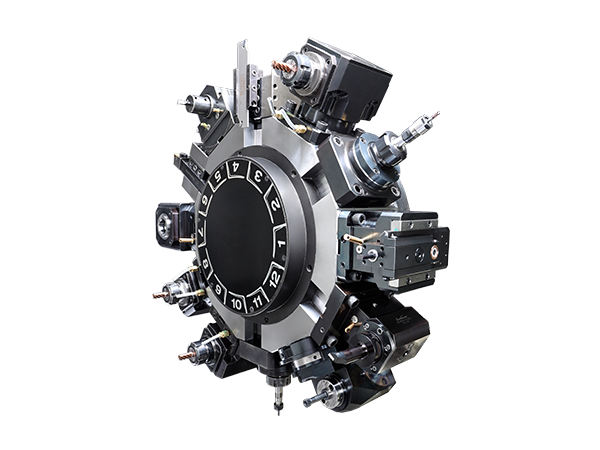
The main components typically include driving gears, driven gears, transmission shafts, bearings, and the output spindle. Their coordination determines how efficiently rotational power reaches the cutting tool. For example, radial milling and drilling heads require a transmission arrangement that redirects rotational motion to the required cutting direction, while axial configurations transmit power along the spindle axis. The accuracy of component alignment and the quality of gear engagement are therefore essential for maintaining stable operation under different cutting conditions.
2. How Does Gear Design Affect Power Transmission Efficiency?
Power transmission efficiency directly influences how effectively a driven tool holder converts the machine's input power into useful cutting performance. Gear tooth geometry, contact conditions, surface finish, and manufacturing accuracy all affect the amount of energy lost during transmission. Poor gear engagement can increase friction, generate additional heat, and reduce the effective power delivered to the cutting tool.
Gear tooth profile and contact ratio are particularly important. Properly designed gear teeth distribute loads across the contact surfaces more consistently, helping reduce localized stress and uneven wear. In addition, accurate machining and suitable surface finishing can improve contact conditions between mating gears. For manufacturers, controlling these factors during production helps create a more reliable transmission system, especially when the tool holder operates under continuous machining loads.
3. How Do Gear Ratios Influence Output Speed and Torque?
The gear ratio determines the relationship between input speed and output speed, making it an important consideration when selecting a VDI Driven Tool Holder for specific machining applications. A transmission arrangement that reduces output speed can increase available output torque, while a speed-increasing arrangement can support higher rotational speeds with corresponding changes in available torque. Actual performance also depends on input power, transmission losses, and the machine's operating limits.
Different machining processes require different combinations of speed and torque. Small-diameter drilling and certain milling operations may benefit from higher rotational speeds, whereas larger cutting tools or demanding material-removal tasks may require greater torque. Tapping operations also require suitable speed control and stable rotational performance to maintain thread quality. Therefore, buyers should evaluate the required cutting speed, tool diameter, workpiece material, and cutting load together rather than choosing a driven tool holder based on maximum speed alone.
4. How Does Gear Meshing Accuracy Affect Machining Stability?
Gear meshing accuracy has a direct relationship with the smoothness of power transmission. Excessive backlash, uneven tooth contact, or manufacturing deviations can contribute to vibration, noise, and inconsistent rotational movement. Under demanding cutting conditions, these issues may affect tool positioning stability and lead to variations in the machined surface.
Backlash is the clearance between mating gear teeth. Although a certain amount of clearance is necessary for proper operation and lubrication, excessive backlash can reduce transmission consistency, particularly when the cutting load changes. Gear alignment, shaft positioning, bearing support, and assembly tolerances must also be considered because they influence how loads are distributed throughout the transmission system.
For CNC machining applications requiring consistent hole positioning, accurate milling, and repeatable surface finishes, the complete transmission assembly needs to work as an integrated system. Improving gear meshing accuracy while maintaining appropriate bearing support can help reduce unwanted vibration and support more stable cutting performance.
5. How Do Gear Materials and Heat Treatment Affect Service Life?
Gear materials and heat treatment processes determine how well transmission components withstand repeated contact stress, friction, and mechanical loads. During continuous operation, gear teeth experience repeated engagement, making surface hardness, core strength, and fatigue resistance important factors in long-term reliability.
Suitable alloy steels are commonly considered for precision gear applications because they can provide a balance of strength and wear resistance. Depending on the design requirements, processes such as carburizing, quenching, and tempering may be used to improve surface hardness while maintaining sufficient toughness in the gear core. These treatments help reduce the risk of premature tooth wear, surface fatigue, and deformation under repeated loading.
Lubrication is another essential factor. Proper lubrication helps establish a protective film between contacting gear surfaces, reducing friction and controlling heat generation. Insufficient lubrication, contamination, or unsuitable maintenance intervals can accelerate wear and affect transmission accuracy. Consequently, material selection, heat treatment, lubrication, and assembly quality should be considered together when evaluating the expected service life of a driven tool holder.
6. What Should Buyers Consider When Selecting a VDI Driven Tool Holder?
Choosing the right VDI Driven Tool Holder requires more than checking its mounting dimensions. Buyers should first confirm compatibility between the holder interface and the CNC lathe turret. VDI interface configurations, including DIN 69880-related product options, must match the machine's mounting requirements to ensure proper installation and reliable operation.
The machining application is equally important. Axial drilling and milling heads are suitable for operations along the spindle direction, while radial configurations support machining from a perpendicular direction. Buyers should also compare the required output speed, torque, tool clamping method, machining direction, and available clearance around the workpiece. For applications involving continuous production or demanding cutting conditions, transmission stability, bearing support, lubrication, and maintenance requirements deserve particular attention.
XiRay offers a range of VDI tooling solutions, including VDI DIN 1809, VDI DIN 5480, VDI DIN 5482, VDI MT, and VDI DIN 69880-related configurations. Its product range includes axial and radial drilling and milling heads, offset designs, tapping heads, and other specialized tooling options. This variety allows manufacturers to evaluate different configurations according to machine compatibility and machining requirements rather than relying on a single standard design.
7. Conclusion: Gear Transmission Design Supports Reliable CNC Machining
Gear transmission design is a fundamental factor influencing the overall performance of a VDI Driven Tool Holder. Gear geometry and meshing accuracy affect power transfer and rotational stability, while transmission ratios determine the relationship between output speed and torque. Meanwhile, material selection, heat treatment, lubrication, and assembly quality contribute to long-term durability.
For manufacturers seeking consistent CNC machining results, evaluating the complete transmission system is essential. A suitable driven tool holder should match the machine interface, cutting requirements, and operating conditions while providing dependable power transmission. With experience in metalworking tool holder development and a broad VDI tooling portfolio, Jiaxing XiRay Industrial Technology Co., Ltd. provides tooling solutions for different turning centers and precision machining applications. Selecting the appropriate VDI configuration can help manufacturers improve machining flexibility, reduce secondary setups, and maintain consistent production performance.


