


In modern manufacturing, CNC machining efficiency depends on more than cutting speed alone. Setup time, tool positioning accuracy, machining stability, and equipment compatibility all influence production costs and delivery schedules. For manufacturers processing complex metal components, a BMT Driven Tool Holder can help integrate turning, milling, drilling, and tapping operations on a CNC turning center. By enabling rotary cutting tools to operate through the machine turret's drive system, BMT live tooling can reduce unnecessary workpiece transfers and support more efficient production workflows.
How Does a BMT Driven Tool Holder Support Multi-Operation Machining?
A BMT Driven Tool Holder is designed for CNC lathes and turning centers equipped with compatible driven-tool stations. Unlike a static tool holder, which secures a non-rotating tool for conventional turning operations, a driven holder incorporates a powered spindle that transfers rotational motion to the cutting tool. This allows suitable milling cutters, drills, and taps to perform additional operations without requiring the workpiece to move to a separate machining center.
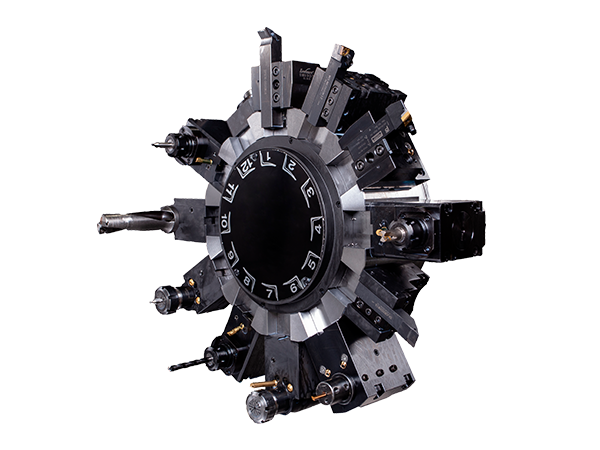
For manufacturers producing components with cross-holes, milled flats, slots, or threaded features, this capability can simplify process planning. Instead of dividing turning and secondary machining between several machines, programmers may be able to complete more features within one setup. The actual improvement depends on part geometry, machine configuration, tool access, and the available C-axis or other positioning functions. When these elements are properly coordinated, BMT Live Tooling can help reduce handling time and make better use of available machine capacity.
Can BMT Live Tooling Reduce Setup Time and Workpiece Handling?
Repeated workpiece clamping is a common source of non-cutting time in multi-stage machining. Each transfer between machines requires handling, positioning, and verification, while differences in workholding or datum alignment can introduce additional dimensional variation. By bringing more machining operations onto one CNC turning center, a suitable BMT live tooling configuration can reduce the number of separate setups required for a component.
Consider a turned metal part that also requires radial holes and milled surfaces. A conventional process may involve turning the main profile first, followed by transferring the part to another machine for drilling and milling. With compatible live tooling and machine-axis capabilities, some of these features may be completed during the original setup. This can shorten the overall production route and reduce handling-related risks. However, fewer setups do not automatically guarantee a shorter cycle time; tool changes, spindle synchronization, indexing movements, and cutting conditions must also be considered during process optimization.
Why Does BMT Mounting Rigidity Matter in CNC Lathe Milling?
Machining stability is another important factor in production efficiency. During milling or drilling, cutting forces act on the tool holder, turret, and machine structure. Excessive deflection or vibration can affect surface finish, dimensional consistency, and cutting-tool life. BMT holders use a face-mounted interface secured to the turret with bolts, creating a mounting arrangement intended to provide stable support when correctly matched to the machine.
In CNC Lathe Milling, the performance of the complete system depends on more than the mounting interface. Turret condition, contact-surface cleanliness, correct bolt tightening, tool overhang, cutter geometry, and cutting parameters all influence machining results. Excessive tool projection can increase bending and vibration, while unsuitable feeds or cutting speeds may lead to chatter or premature tool wear. Selecting an appropriate holder configuration and keeping the tool assembly as compact as practical can help maintain stable cutting conditions and reduce the risk of rework.
How Does Tool Holder Accuracy Affect Productivity and Part Quality?
Tool holder accuracy directly affects the consistency of machining operations. Radial runout, improper tool clamping, worn spindle bearings, or contamination on mounting surfaces can cause the cutting edges to engage unevenly. Depending on the operation, these conditions may contribute to inconsistent hole sizes, poor surface finishes, uneven tool wear, and dimensional deviations.
To maintain reliable performance, operators should inspect the tool interface and holder mounting surfaces before installation, confirm that the cutting tool is clamped correctly, and measure runout when required by the machining process. If vibration, abnormal noise, or unexpected temperature increases occur during operation, the holder, cutting tool, drive connection, and machine setup should be checked systematically. Addressing these issues early can reduce scrap, unplanned downtime, and unnecessary tool replacement. Acceptable runout limits should be established according to the holder specification, cutting tool, and required component tolerance rather than assuming one value applies to every application.
What Should Manufacturers Check When Selecting a BMT Driven Tool Holder?
Correct machine compatibility is essential when choosing a BMT Driven Tool Holder. Although different CNC lathes may use BMT-style tooling, their turret dimensions, bolt patterns, drive connections, and other interface details are not necessarily interchangeable. Buyers should verify the machine manufacturer, exact model, turret configuration, and required BMT size before ordering. The tool holder must also match the machine's driven-tool system to ensure that it can be installed and operated as intended.
The cutting application determines the next group of selection criteria. Manufacturers should consider the required spindle speed and torque, tool interface, cutter dimensions, machining direction, available clearance, and workpiece material. Drilling deep holes, milling interrupted surfaces, and tapping threads place different demands on the tooling system. Coolant delivery should also be checked when the process requires it, because not every holder supports the same coolant arrangement or pressure. Confirming these details before purchase helps avoid compatibility problems and supports more predictable machining performance.
How Can Coolant Management Improve Drilling and Milling Performance?
Heat generation and chip evacuation can become limiting factors during drilling and other demanding cutting operations. If chips accumulate around the cutting edge, they may damage the machined surface, increase cutting resistance, or shorten tool life. Appropriate coolant delivery can help control temperature and clear chips from the cutting zone, especially in applications where hole depth and material properties make evacuation difficult.
Some driven tool holder configurations support through-tool coolant, while others rely on external coolant delivery. Manufacturers should verify the actual holder design, sealing arrangement, machine coolant supply, and tool requirements before selecting a solution. Coolant pressure should remain within the limits specified by the equipment manufacturer. Effective coolant management, combined with suitable cutting parameters and chip-control strategies, can contribute to more stable machining and fewer interruptions without assuming that every application will achieve the same productivity improvement.
How Does XiRay Support Different CNC Lathe Tooling Requirements?
Jiaxing XiRay Industrial Technology Co., Ltd. provides tooling solutions for CNC turning and related machining applications. Its BMT Driven Tool Holder & Static Tool Holder product range includes system-specific categories for machine platforms such as Mazak, Mori Seiki, Okuma, Citizen, Star, Nakamura Tome, and other listed manufacturers. This product organization helps buyers identify relevant tooling options according to their machine system and application requirements.
XiRay's range includes both driven and static holders for different machining tasks. Driven holders are used when powered rotary tools are required for operations such as milling and drilling, while static holders support conventional turning and other operations using non-rotating tools. Before selecting a product, customers should confirm the machine model, turret interface, required tool configuration, and machining conditions with the supplier. Matching these factors is an important step toward achieving dependable installation, stable machining, and efficient production.


